
Yesterday while reading one of my regular forums, I came across a thread that made me think about a few things. This particular thread was about an online service that allows you to watch movies and television shows at anytime. Originally, this company was nothing more than an online dvd rental, but now offers streaming movies and tv through your computer or gaming system, along with wi-fi capability. While the responses within the thread were different from each person, they were all basically the same in their core. Every one of them used this service, and most of them had it set up for use in multiple rooms so they could watch something or get online virtually anywhere in their homes.
I hear of and see people with cell phones that are capable of nearly everything a personal computer can do. You can use this phone to check your e-mail, get online, take and send pictures, text message, read a book, and now virtually any application that you can think of is available. For the majority of people, their phone never leaves their side. Some simply cannot imagine functioning without it
I'm old enough to remember when my parents got their first color television. I remember when the first commercially sold calculator and digital watch came out. I remember the first people I knew with their own computer had both a Commodore Vic-20 and a Commodore 64. I remember the first person I personally knew with a cell phone had a Motorola bag phone in his work truck, and I remember when my neighbor was the first person I knew to own a video game system when he got an Atari for Christmas. With the exception, of course, of the first television; I have been able to watch home electronics first come onto the scene and advance into what they now are in my 45 years on this Earth. I even remember going from an old rotary phone to a push button. And wow, that first cordless phone was just the coolest thing ever made. We though we were just a few years away from flying cars. Really?? A phone that doesn't have a cord?? WOW, this is like the Jetsons! Where is my robot maid and flying car???
. This is the hard part to think and write about. Have you ever gotten to the point in your life when you realize you sound like your parents? "I remember when I was your age...." "...uphill both ways in the snow"...... Well, I'm kind of there with this post. It's a bit of a hard pill to swallow, but I can accept it. Excuse me while I go look for another 50 gray hairs on my head....
I can't deny that electronics have advanced and in many ways helped or made our lives easier, but I can't help but wonder what they have done to us as a society. We've become so reliant on these items that we can't imagine living without them, and some have become so addicted to them that these devices nearly rule their lives. It's strange to me to see and read of people doing so many things with some electronic device, that either they could easily do otherwise, or so relying on that device for their day to day lives that they cannot do anything without it.
As I said earlier, I remember when a neighbor got an Atari game system for Christmas. It was actually pretty cool at the time. We would spend countless winter hours playing Frogger, PacMan, or drag racing. It killed time on those winter days, or those rainy summer days when there wasn't much to do outside. But, when the weather changed, that system sat on the shelf collecting dust. We had things to do-riding our bikes, chores (anyone remember those?), helping our parents, hunting, fishing, etc. Now I see people that spend entire evenings, or even days, playing games on the newer advanced systems. I personally know several who sometimes brag about spending their entire day off lounging on the couch playing the latest war-type game.
I've watched the home computers grow over the past 30 years. In high school, we used Radio Shack TRS80 computers, and now there are phones that are capable of far more than they were. I remember using my friends Commodore 64 over a phone line and thinking how awesome it was to be able to access someone else's computer. Now I can send e-mail, access any information, talk to friends instantly, and, of course, write in this blog. Actually, for those that don't know, I even met Lisa online almost 13 years ago.
I remember seeing people on tv with cell phones years ago. Normally they were the car phones, but handhelds weren't far behind them. The first person I knew to have any kind of cell phone was my supervisor/foreman when I first entered the pipe trade almost 16 years ago.He had a bag phone the size of a duffel bag in his truck, and it got horrible reception. Now I look around me and know only one person who doesn't have one. I'm constantly surrounded by people whose phone never, ever, leaves their side; and is constantly going off whether it's a call or text message. They're everywhere, and you can barely go anywhere where you won't see someone with their phone glued to their ear or typing away at a text message.
We did, at one time, have a game system. I had bought it the same winter when I met Lisa. I was working out of town and staying in a hotel 5-6 nights a week in the dead of northeast Ohio winter. I bought a used system and a few games just to pass the time in a hotel room. I still had the game system when we bought this place almost 11 years ago. I didn't think at the time I played it often, but I soon learned differently. I was sitting in front of the tv, playing a racing game, when I got up to get some coffee. As I walked to the kitchen, I realized that it was a beautiful day outside, and I had just spent 2-3 hours wasting away at a game. I unplugged the game and traded it off a few days later. I had the exact same thing happen 2 years ago when I realized that I had wasted 4 hours of a wonderful summer day watching a Mythbusters marathon. Two days later, we had the cable company come get the box, and we've never looked back. Since that day, I have read more books than I probably did in the previous ten years. I've stopped wasting my time and have educated myself in many ways. We spend time reading, talking to each other, and even sitting at the table playing board games. Life itself has improved in many ways since tossing the cable out of the window.
I've been writing this post a little at a time over the course of several days. I try not to cop an attitude when I write something like this based solely on my own opinion, but sometimes I do. It's those times when I delete the part I didn't like, and let it sit for a while. This morning I sat to read one of my regular forums with my first cup of coffee. Their forum is broken down into categories like most others, and I see a new post in the "videos" section. Sometimes the videos posted are educational, sometimes they're just entertaining, and sometimes they're of the poster's things done at their own home. I click on one that's titled in a way that makes me think it's from his home. When it opens, I'm disappointed to see that it's yet another video promotion for another video game. I see grown men talking about how they can't wait for the release of this game. Grown men. Not kids, not teens, not even 20-somethings, grown men. Maybe I'm just too disconnected now from games and television, but I just can't understand someone my age getting excited over a video game. It boggles my mind.
I'm sure that everyone is wondering where I am going with all of this, and here it is. I have to wonder if advances in home electronics have not only helped us grow as a society, but somehow choked us as people and are holding us back from being human. I see so many people around me and in the world that can't possibly survive their day to day life without electronics. They can't imagine a day without a cell phone, television, or game system. What started as simple communication and entertainment devices have turned into things that, for lack of better terms, rule our lives.I know people who can't even go to the bathroom without their cell phone. I know people that spend every waking moment away from work playing video games. I know people who sit and either read online or play games just the same. We are addicted, and we are reliant on each and every one of them in some form, whether we will admit it or not.
I'm aware that we live a lot differently than most of society. We aren't "the norm". I get that. But sometimes I have to look around and see how people live so differently that I'm not making myself an outcast from the norm, the norm is making me an outcast from it. I can't say we don't own any electronics. We do both have cell phones, and obviously we own a computer, but that's as far as we go. We don't have cable or satellite tv. We have an old, regular, boxy tv that we use to watch the occasional dvd. We don't own any type of game system, portable book reading device, or the latest phone capable of more than this old computer running WIndows 98. We've made our decisions based on our choices of how to live, and quite frankly, we never plan to go back.
I'm not saying everyone should make the choices we have. I'm not going to suggest to everyone that they toss the tv out of the window and concentrate on nothing but growing and raising their own food. I'm just asking that people take a step back and see what these things are doing to us. Everyone laughs at those old pictures from the 50's with the entire family huddled around the tiny black and white television. At the very least, they were together. Now look around and see that everyone in the family has their own tv, phone, computer, and game system in their own rooms. The dad is playing a war game, the mom is watching a chick-flick, the son is playin a guitar-playing game, and the little sister is on a social networking site talking about her teachers mole.
Take a day sometime and turn off all the electronics. Unplug for a while. Leave the tv and computer off. Leave your cell phone alone except for calls. Go outside and get some fresh air. Go to the library or book store and get a book. No, not from an online store or an e-book; I mean a good old fashioned paper book. Sit back and relax. Educate yourself. Go for a walk in the woods or the park. Sit under a tree and enjoy nature. Go home and plant something, then watch it grow. Think about that new electronics purchase. Do you really NEED it?
Thursday, March 17, 2011

Spring Cleaning
What a dreary morning here. It's cold, raining, and the yard & garden look like a swamp. It's one of those mornings when you look out of the window and just want to go back to sleep. But, the snow is gone, the birds are singing, and warmer weather is on the way. There are so many things to do outside. I hope the warm and sunny shows up soon and sticks around. It's been a long, cold, snowy winter.
I've been tackling small projects over the past few days. The largest one has been cleaning and rearranging the tools and garage. I was able to get a nice metal roll-away tool box from the house I've been cleaning out, and I took the time to clean it completely and put away my hand tools. It's very cool to have everything organized and in separate drawers for the first time. Philips screwdrivers are separated from standard screwdrivers, 1/4, 3/8, and 1/2 inch sockets and ratchets have their own drawers, metric and standard sockets each have their own spot, each type of plier has it's own drawer,(channel locks, pilers, snips, wire cutters/strippers etc), even torque drivers have their own drawer now. Ahhhhhhhh big box of red painted steel and tooliness, how I love thee so. Yes "tooliness" is now an official word. I think it belongs in the "Lisa-ism's dictionary with "roundy".
I had a much smaller roll-away box that I bought from Sears probably 17 years ago that I planned to give to a friend. But realizing that I have more tools than I had wall or available drawer space, I ended up using it. This one now holds drill bits and drill accessories, drywall tools, paint brushes and rollers, misc other household tools, and a drawer of tape measures. Yes, a drawer of different styles and sizes of tape measures. Lisa has shoes,(I dont have shoes...I have crafty stuff!!!) I have tape measures. Lots of them. It's a guy thing. (please note the edit from Lisa while I left this open on Wordpad) Remind me to not do that again.
While the workshop side of the garage is finally coming back together, I look at the other side and can't do anything but sigh. It's a small 2 car garage that I split in half by making a long workbench down the center between posts. The right side holds gas cans, garden tools, pots, and other misc things either on shelves or on the wall. The big problem is the floor area. In that one side; I have the tractor, tiller, push mower, wood chipper, garden cart, animal cage, four bicycles, chicken feed bins, straw, buckets, wash tubs, jack stands, floor jack, and a few other things. I've had to face facts that I have more "stuff" than I have garage. I'd love to build a lean-to behind the garage, or build a shed, but we don't have the money, and then there's always that ridiculous building permit thing that gets in the way. I'm going to try thinning out some things, but most in there are necessities. Arrrrrrrrrrgggghhhhhhhhh it's frustrating. Getting rid of tools? Is that really allowed? Will the tool gods strike me down?
I want to get things together, cleaned, and organized long before we start spring planting. I'm taking the time now before I start work in a week or two since we'll be back to just weekends and evenings for getting things done. It will be more difficult than last year since we added so many new garden spaces, but we'll manage just fine. The gardening and food production will just have to be on the very top of the priority list. Spare time for other things will be scarce this spring and summer,but I'm fine with that. That's what I do. I want this season to not only top last years production, but I want to prove that we can do it all while working two full time jobs. For me, the challenge itself gives me the drive. I do love a challenge.
I've been tackling small projects over the past few days. The largest one has been cleaning and rearranging the tools and garage. I was able to get a nice metal roll-away tool box from the house I've been cleaning out, and I took the time to clean it completely and put away my hand tools. It's very cool to have everything organized and in separate drawers for the first time. Philips screwdrivers are separated from standard screwdrivers, 1/4, 3/8, and 1/2 inch sockets and ratchets have their own drawers, metric and standard sockets each have their own spot, each type of plier has it's own drawer,(channel locks, pilers, snips, wire cutters/strippers etc), even torque drivers have their own drawer now. Ahhhhhhhh big box of red painted steel and tooliness, how I love thee so. Yes "tooliness" is now an official word. I think it belongs in the "Lisa-ism's dictionary with "roundy".
I had a much smaller roll-away box that I bought from Sears probably 17 years ago that I planned to give to a friend. But realizing that I have more tools than I had wall or available drawer space, I ended up using it. This one now holds drill bits and drill accessories, drywall tools, paint brushes and rollers, misc other household tools, and a drawer of tape measures. Yes, a drawer of different styles and sizes of tape measures. Lisa has shoes,(I dont have shoes...I have crafty stuff!!!) I have tape measures. Lots of them. It's a guy thing. (please note the edit from Lisa while I left this open on Wordpad) Remind me to not do that again.
While the workshop side of the garage is finally coming back together, I look at the other side and can't do anything but sigh. It's a small 2 car garage that I split in half by making a long workbench down the center between posts. The right side holds gas cans, garden tools, pots, and other misc things either on shelves or on the wall. The big problem is the floor area. In that one side; I have the tractor, tiller, push mower, wood chipper, garden cart, animal cage, four bicycles, chicken feed bins, straw, buckets, wash tubs, jack stands, floor jack, and a few other things. I've had to face facts that I have more "stuff" than I have garage. I'd love to build a lean-to behind the garage, or build a shed, but we don't have the money, and then there's always that ridiculous building permit thing that gets in the way. I'm going to try thinning out some things, but most in there are necessities. Arrrrrrrrrrgggghhhhhhhhh it's frustrating. Getting rid of tools? Is that really allowed? Will the tool gods strike me down?
I want to get things together, cleaned, and organized long before we start spring planting. I'm taking the time now before I start work in a week or two since we'll be back to just weekends and evenings for getting things done. It will be more difficult than last year since we added so many new garden spaces, but we'll manage just fine. The gardening and food production will just have to be on the very top of the priority list. Spare time for other things will be scarce this spring and summer,but I'm fine with that. That's what I do. I want this season to not only top last years production, but I want to prove that we can do it all while working two full time jobs. For me, the challenge itself gives me the drive. I do love a challenge.
Sunday, March 13, 2011
Repost-A window to my past
Last night I was talking to some people in a chat through one of my regular forums, and questions came up about some of the things I do here at home. Some of the questions were about rabbits, and I mentioned how killing and butchering them didn't affect me very much since I had hunted since I was very young. I told them that sometimes, hunting was a necessity, and it reminded me of a post in this blog I had written a while ago. I dug through the blog archives and found it, and posted the link to share. As I sat here reading it late last night, I decided that today I would repost it here in the blog just to give some of the newer readers a little perspective on some things that have partly made me who I am. Some of you I've met through online forums, some of you I knew 25 years ago in school, and some of you just stumbled across my little corner of the internet and decided to stick around. Either way, this post from December 30th of 2008 will let you see a little bit of my past, and how it has returned to form me into who I am now. Enjoy.
While growing up, I never learned any of the wilderness survival skills in the scout books like making a shelter or tying knots, but I learned a lot from just living, even though at the time I didn't realize it. I learned to garden, I learned to shoot and hunt, I learned to fish, I learned how to preserve food, and I learned how to live on next to nothing. Times were hard at home, nearly my entire youth was spent from check to check by my parents barely making ends meet.At that time in the late 60's and early 70's, concrete guys just plain didn't work in the winter, so dad was always layed off. To understand where I'm coming from, I'll go into a little detail:
I grew up with my mom, dad, and sister on 3 acres in a small township in the same county I live in now. Our house was a 3 room basement home. NOT 3 bedrooms, 3 ROOMS...kitchen, living room, backroom, that's it. We slept in the same room as our parents on bunkbeds till I was about 12, when dad separated the 2 rooms. Heat in the house was via an oil burning stove in the center of the living room,no ductwork, just radiant heat.(so even though we had our own room, we had to keep the door open when it was cold) We had well water attached to a kitchen sink and a washing machine, and that was all. We bathed in an old galvanized washtub with hot water from the sink. Our toilet was an indoor outhouse of sorts, inside a closet in the backroom. Basically just a frame with a seat and bucket underneath, with a matching real outhouse behind the old shed that was about 80 yards from the house.In the evenings after dark, dad carried that bucket to the outhouse, 365 days a year. We finally got a real bathroom with a tub, shower, and toilet when I was 15, so we (sis and I)thought we were rich. We had a black and white tv attached to a 25 foot antenna tower dad scrounged from a jobsite, with a grand total of 5 stations. (anyone else remember antenna rotors?) I believe I was around 18 or 19 when we got basic cable.I remember an old rotary phone in the house till around '85 as well. The flat tar roof leaked, the floor was almost always damp, the bare block walls cold, and the place always smelled of heating oil and Hoppes gun cleaner. (though I still love the smell of Hoppes, lol)
Food was always a big issue. During the warmer months, we ate what we deemed as "normal" food, though most was the cheapest cut available, and usually other things from the dented can bins at the local Sparkle Market. We busted our asses with a decent sized garden all summer, and I grew to hate it as a kid. I remember many days of pushing myself and my sister through green briar to pick blackberries, as well as wild grapes, so mom could make jellies and jams to can or freeze. (I still hate freezer jam though!) We never had any animals other than beagles, so our only meat source other than the store (when dad was working) was hunting. I can't begin to imagine how many meals we had that were duck, squirrel, or rabbit. At the time there were still pheasants in this part of Ohio, and we were always excited to bag one since it meant a good sized dinner. I think the worst time we had was one winter when dad and I set off hunting on Thanksgiving morning hoping to get a pheasant so we didn't have to have rabbit for dinner. Luckily we got one that day .
Funny how life works, isn't it? Most of my life I hated the way I grew up and resented my parents for making us live that way. We were "forced" to help around the house and garden. We had to use an outhouse when everyone else had a real bathroom. We had to watch an old b&w tv when the neighbors had color, remote control AND cable! All through my teens 20's,and early 30's, I pulled myself as far away from that life as I could, buying and doing everything I could, just because I could. But here I sit, typing and thinking about all of this and realize something. I'm going back to that way of life on purpose. It makes me chuckle to think about it, but it also makes me kinda sad. I wasted all that time trying to ignore who/what I really am. It took me all this time to find myself, but I made it. Without my childhood, and without Lisa's encouragement I would never be where I am now.....make that-WE would never be where WE are now.Without going into any detail, she grew up very similar in a house not much bigger with FOUR siblings...and I thought I had it tough! Sometimes I write in this blog like it's all me, but it's far from it. Lisa had taken every step right beside me the whole way,taking this incredible journey of lifestyle change that we are on.
Though they'll never see this, thank you mom and dad for making me who I am today, and thank you Lisa for your love and encouragement. You are my guiding light down this path to self sufficiency.
Tuesday, December 30, 2008
After reading Farmergeeks response on his blog about the Boy Scout books, it somehow reminded me of my youth. Nope, I was never a scout, but I had always wanted to be one. I wanted to wear that uniform, I wanted to go on outings, have friends, and learn from them, but it never happened for several reasons. One, my parents never liked to drive anywhere other than work or to the store. Two, they could never have afforded anything I would have needed to be in the scouts. And three, dad always said they were wimps, lol, I imagine he couldn't get in either...grumpy old fart. Plus I was a very nervous kid..really withdrawn,shy, and afraid of everything. Hard to believe ain't it??? lolWhile growing up, I never learned any of the wilderness survival skills in the scout books like making a shelter or tying knots, but I learned a lot from just living, even though at the time I didn't realize it. I learned to garden, I learned to shoot and hunt, I learned to fish, I learned how to preserve food, and I learned how to live on next to nothing. Times were hard at home, nearly my entire youth was spent from check to check by my parents barely making ends meet.At that time in the late 60's and early 70's, concrete guys just plain didn't work in the winter, so dad was always layed off. To understand where I'm coming from, I'll go into a little detail:
I grew up with my mom, dad, and sister on 3 acres in a small township in the same county I live in now. Our house was a 3 room basement home. NOT 3 bedrooms, 3 ROOMS...kitchen, living room, backroom, that's it. We slept in the same room as our parents on bunkbeds till I was about 12, when dad separated the 2 rooms. Heat in the house was via an oil burning stove in the center of the living room,no ductwork, just radiant heat.(so even though we had our own room, we had to keep the door open when it was cold) We had well water attached to a kitchen sink and a washing machine, and that was all. We bathed in an old galvanized washtub with hot water from the sink. Our toilet was an indoor outhouse of sorts, inside a closet in the backroom. Basically just a frame with a seat and bucket underneath, with a matching real outhouse behind the old shed that was about 80 yards from the house.In the evenings after dark, dad carried that bucket to the outhouse, 365 days a year. We finally got a real bathroom with a tub, shower, and toilet when I was 15, so we (sis and I)thought we were rich. We had a black and white tv attached to a 25 foot antenna tower dad scrounged from a jobsite, with a grand total of 5 stations. (anyone else remember antenna rotors?) I believe I was around 18 or 19 when we got basic cable.I remember an old rotary phone in the house till around '85 as well. The flat tar roof leaked, the floor was almost always damp, the bare block walls cold, and the place always smelled of heating oil and Hoppes gun cleaner. (though I still love the smell of Hoppes, lol)
Food was always a big issue. During the warmer months, we ate what we deemed as "normal" food, though most was the cheapest cut available, and usually other things from the dented can bins at the local Sparkle Market. We busted our asses with a decent sized garden all summer, and I grew to hate it as a kid. I remember many days of pushing myself and my sister through green briar to pick blackberries, as well as wild grapes, so mom could make jellies and jams to can or freeze. (I still hate freezer jam though!) We never had any animals other than beagles, so our only meat source other than the store (when dad was working) was hunting. I can't begin to imagine how many meals we had that were duck, squirrel, or rabbit. At the time there were still pheasants in this part of Ohio, and we were always excited to bag one since it meant a good sized dinner. I think the worst time we had was one winter when dad and I set off hunting on Thanksgiving morning hoping to get a pheasant so we didn't have to have rabbit for dinner. Luckily we got one that day .
Funny how life works, isn't it? Most of my life I hated the way I grew up and resented my parents for making us live that way. We were "forced" to help around the house and garden. We had to use an outhouse when everyone else had a real bathroom. We had to watch an old b&w tv when the neighbors had color, remote control AND cable! All through my teens 20's,and early 30's, I pulled myself as far away from that life as I could, buying and doing everything I could, just because I could. But here I sit, typing and thinking about all of this and realize something. I'm going back to that way of life on purpose. It makes me chuckle to think about it, but it also makes me kinda sad. I wasted all that time trying to ignore who/what I really am. It took me all this time to find myself, but I made it. Without my childhood, and without Lisa's encouragement I would never be where I am now.....make that-WE would never be where WE are now.Without going into any detail, she grew up very similar in a house not much bigger with FOUR siblings...and I thought I had it tough! Sometimes I write in this blog like it's all me, but it's far from it. Lisa had taken every step right beside me the whole way,taking this incredible journey of lifestyle change that we are on.
Though they'll never see this, thank you mom and dad for making me who I am today, and thank you Lisa for your love and encouragement. You are my guiding light down this path to self sufficiency.
Wednesday, March 9, 2011
Meat-Part 2
In the last post, I talked about how much meat the US raises, consumes, and wastes in the average year. Today I'm going to touch on that a little more, and bring up the many reasons why we will no longer eat grocery store meat. Actually, make that *can't* eat grocery store meat.
First of all, we have to face the facts that society is always changing. In a previous post, I talked about how much things changed as people moved off the family farms and homesteads, and into the larger towns and cities. As these areas expanded and grew, people became more dependent on the store and the butcher. While a large population still provided for themselves, many people could no longer do so, or just plain didn't want to. They worked a job for a wage, and that wage provided them with the things they wanted and needed. The demand for food grew as these people settled more and more for city life. In a sense around this time, farms grew from providing for their own family and small communities, into businesses that could provide for more consumers.
Just going back 80 years to the 1930's, 24% of the American population worked in agriculture. In 2002, that number dropped to 1.5%. In 1940, each farm worker was able to roughly provide for 11 consumers, yet in 2002, that one worker was able to provide for 90. Data I have found has shown that agricultural production had doubled four times between 1820 and 1975, while the number of actual farms has fallen 63%. since 1900. So, basically, less farms today produce more food. Farm operations have become specialized, from an average of five commodities per farm in 1900 to one per farm in 2000. While the number of farms and farm workers has dramatically dropped over the years, the US population has exploded by roughly 205 million people in the 20th century. The population was around 76 million in 1900, and was close to 281 million in the year 2000. These "factory farms" were nearly a necessity, simply because of demand.
As the demand grew for food production, the landscape changed dramatically. Since 1860, approximately 260 million acres of forests have been cleared out for meat production in the United States. Simple ranches have turned into factory farm operations, growing larger each year. As of 2009, 74% of the worlds poultry, 43% of the worlds beef, and 68% of the worlds eggs are grown in these factory type operations.In whole, 56% of US farms are devoted to beef production alone. With the growth of the factory farms, agriculture for crops had to grow along with it. In the US, 80% of the corn and 95% of the oats grown here are consumed by livestock. I looked for a nationwide average on water usage by factory farms, but couldn't find anything. I did, however, find that on average, it takes 2500 gallons of water to produce one pound of meat. A 600 pound steer will drink between 3.5 and 13 gallons per day, depending on weather and temperature. I've also found that the amount of water used to produce ten pounds of steak is just over the average water usage of an American household. Once again, I don't even want to do the math and get a rough estimate on how much water is used annually in the beef industry. I won't even go into how much of these crops are GMO's, that was another post.
I totally understand that there is a need for more food production as the population grows. That is not my issue. My problems are in the way these farms operate. Animals are generally kept in cramped quarters, given feed that is not natural to their diets, pumped full of antibiotics and steroids, deprived of sunlight,rarely (if ever) see open pastures, and not to even mention that the feeds are most likely GMO. Don't get me wrong, I'm no tree hugger or PETA type. I eat meat. Hell, I even raise and butcher my own chickens and rabbits. But I believe that not only I should be able to eat something free of chemicals, but I also believe that any animal, whether it's grown for food or not, deserves a good quality of life. That just doesn't happen on these farms.
Before I even go into spewing statistics and information on commercial farms and feed lots, I want to take a look at how much beef we actually consume as a nation. Americans on average, eat 67 pounds of beef per year. Numbers vary by location and even race, but those figures aren't important in keeping this where I want to go with this post. The fast food industry alone uses an enormous amount of the beef produced. In 1996, McDonalds beef usage alone was over 644 million pounds. Just like some of the numbers I found when I was writing the last post, this number to me is just staggering. Just out of curiosity, I looked up the US population of 1996. 265,189,754 million people, which I divided into that 64 million pounds. That works out to 2.43 pounds, per person in the US, in 1996. Just using McDonalds as an example. I honestly think I am going to be sick.
Roughly 13 suppliers in the US supply beef for the entire nation. Their numbers have decreased, but the number of cattle per feed lot has risen approximately 20%. Some of these feedlots can contain up to 100 thousand heads of cattle. I'm not going to do research on amounts and figures, but keep in mind that these cattle are fed mainly corn and soybeans (or products of them) so they fatten faster than they would grazing as they are designed by nature to do. Because of cramped, unsanitary conditions, the cattle are given antibiotics, whether they are sick or not, just as a "preventative" measure. I've found that nearly 30 million pounds of antibiotics are used annually on livestock in the US.
Cattle, the same as any animal eats, and creates waste. It's estimated that beef cattle alone in US operations produce 25 pounds per day per cattle, 250 thousand pounds per second nationwide, and over one billion tons annually. Waste from these farms can, and has, leaked into the waterways, eventually leading to the ocean. Though not from cattle, a six acre lagoon holding hog waste in North Carolina in 1995' spilling an estimated 25 million gallons spilled into the New river. Figures show that approximately ten to fourteen million fish died as the result. This problem is far more than just your normal waste. With the practices of these farms, the waste can contain growth hormones and/or antibiotics. There are studies that link dead zones in the ocean to this runoff.
The affects of the antibiotics and steroids on humans is a big debate. There are no studies that show 100 percent, without a doubt, that these are causing health problems. There are studies that show the possibilities that these are linked to cancers, birth defects, and many other health issues. My look at it is simple. I don't care what any study shows. Steroids and antibiotics do not belong on my plate.
I really have to stop here. I've spent enough of my time researching this stuff. Honestly, I don't want to read any more. I get more disturbed and disgusted with everything I read.
So what can we do about this? There is no one answer. What I can say, is to avoid grocery store meat as much as possible. Buy from local farmers who raise there beef with organic methods. Ask your local butcher where their beef comes from, and if their suppliers are organic. Stop eating fast food and supporting the need for these places. (that stuff is horrible for you anyway) Consider eating meatless meals more often. We generally eat 3-4 meatless dinners a week, and it hasn't been a problem. I though I would hate it, but I've grown used to it and like it now. Though I'm not a vegetarian, and have no plans to be, I do know that we don't "need" meat. There are plenty of other ways to get protein in your diet.
Think about all of this the next time you go shopping or make dinner.Any time you buy their product, you're adding to the machine. Make some changes. Make a difference. No one person can change or stop all of this, but many of us together can at least put a hurt on them. Personally, I sleep better at night knowing that my dollars aren't supporting these practices. How do you sleep?
First of all, we have to face the facts that society is always changing. In a previous post, I talked about how much things changed as people moved off the family farms and homesteads, and into the larger towns and cities. As these areas expanded and grew, people became more dependent on the store and the butcher. While a large population still provided for themselves, many people could no longer do so, or just plain didn't want to. They worked a job for a wage, and that wage provided them with the things they wanted and needed. The demand for food grew as these people settled more and more for city life. In a sense around this time, farms grew from providing for their own family and small communities, into businesses that could provide for more consumers.
Just going back 80 years to the 1930's, 24% of the American population worked in agriculture. In 2002, that number dropped to 1.5%. In 1940, each farm worker was able to roughly provide for 11 consumers, yet in 2002, that one worker was able to provide for 90. Data I have found has shown that agricultural production had doubled four times between 1820 and 1975, while the number of actual farms has fallen 63%. since 1900. So, basically, less farms today produce more food. Farm operations have become specialized, from an average of five commodities per farm in 1900 to one per farm in 2000. While the number of farms and farm workers has dramatically dropped over the years, the US population has exploded by roughly 205 million people in the 20th century. The population was around 76 million in 1900, and was close to 281 million in the year 2000. These "factory farms" were nearly a necessity, simply because of demand.
As the demand grew for food production, the landscape changed dramatically. Since 1860, approximately 260 million acres of forests have been cleared out for meat production in the United States. Simple ranches have turned into factory farm operations, growing larger each year. As of 2009, 74% of the worlds poultry, 43% of the worlds beef, and 68% of the worlds eggs are grown in these factory type operations.In whole, 56% of US farms are devoted to beef production alone. With the growth of the factory farms, agriculture for crops had to grow along with it. In the US, 80% of the corn and 95% of the oats grown here are consumed by livestock. I looked for a nationwide average on water usage by factory farms, but couldn't find anything. I did, however, find that on average, it takes 2500 gallons of water to produce one pound of meat. A 600 pound steer will drink between 3.5 and 13 gallons per day, depending on weather and temperature. I've also found that the amount of water used to produce ten pounds of steak is just over the average water usage of an American household. Once again, I don't even want to do the math and get a rough estimate on how much water is used annually in the beef industry. I won't even go into how much of these crops are GMO's, that was another post.
I totally understand that there is a need for more food production as the population grows. That is not my issue. My problems are in the way these farms operate. Animals are generally kept in cramped quarters, given feed that is not natural to their diets, pumped full of antibiotics and steroids, deprived of sunlight,rarely (if ever) see open pastures, and not to even mention that the feeds are most likely GMO. Don't get me wrong, I'm no tree hugger or PETA type. I eat meat. Hell, I even raise and butcher my own chickens and rabbits. But I believe that not only I should be able to eat something free of chemicals, but I also believe that any animal, whether it's grown for food or not, deserves a good quality of life. That just doesn't happen on these farms.
Before I even go into spewing statistics and information on commercial farms and feed lots, I want to take a look at how much beef we actually consume as a nation. Americans on average, eat 67 pounds of beef per year. Numbers vary by location and even race, but those figures aren't important in keeping this where I want to go with this post. The fast food industry alone uses an enormous amount of the beef produced. In 1996, McDonalds beef usage alone was over 644 million pounds. Just like some of the numbers I found when I was writing the last post, this number to me is just staggering. Just out of curiosity, I looked up the US population of 1996. 265,189,754 million people, which I divided into that 64 million pounds. That works out to 2.43 pounds, per person in the US, in 1996. Just using McDonalds as an example. I honestly think I am going to be sick.
Roughly 13 suppliers in the US supply beef for the entire nation. Their numbers have decreased, but the number of cattle per feed lot has risen approximately 20%. Some of these feedlots can contain up to 100 thousand heads of cattle. I'm not going to do research on amounts and figures, but keep in mind that these cattle are fed mainly corn and soybeans (or products of them) so they fatten faster than they would grazing as they are designed by nature to do. Because of cramped, unsanitary conditions, the cattle are given antibiotics, whether they are sick or not, just as a "preventative" measure. I've found that nearly 30 million pounds of antibiotics are used annually on livestock in the US.
Cattle, the same as any animal eats, and creates waste. It's estimated that beef cattle alone in US operations produce 25 pounds per day per cattle, 250 thousand pounds per second nationwide, and over one billion tons annually. Waste from these farms can, and has, leaked into the waterways, eventually leading to the ocean. Though not from cattle, a six acre lagoon holding hog waste in North Carolina in 1995' spilling an estimated 25 million gallons spilled into the New river. Figures show that approximately ten to fourteen million fish died as the result. This problem is far more than just your normal waste. With the practices of these farms, the waste can contain growth hormones and/or antibiotics. There are studies that link dead zones in the ocean to this runoff.
The affects of the antibiotics and steroids on humans is a big debate. There are no studies that show 100 percent, without a doubt, that these are causing health problems. There are studies that show the possibilities that these are linked to cancers, birth defects, and many other health issues. My look at it is simple. I don't care what any study shows. Steroids and antibiotics do not belong on my plate.
I really have to stop here. I've spent enough of my time researching this stuff. Honestly, I don't want to read any more. I get more disturbed and disgusted with everything I read.
So what can we do about this? There is no one answer. What I can say, is to avoid grocery store meat as much as possible. Buy from local farmers who raise there beef with organic methods. Ask your local butcher where their beef comes from, and if their suppliers are organic. Stop eating fast food and supporting the need for these places. (that stuff is horrible for you anyway) Consider eating meatless meals more often. We generally eat 3-4 meatless dinners a week, and it hasn't been a problem. I though I would hate it, but I've grown used to it and like it now. Though I'm not a vegetarian, and have no plans to be, I do know that we don't "need" meat. There are plenty of other ways to get protein in your diet.
Think about all of this the next time you go shopping or make dinner.Any time you buy their product, you're adding to the machine. Make some changes. Make a difference. No one person can change or stop all of this, but many of us together can at least put a hurt on them. Personally, I sleep better at night knowing that my dollars aren't supporting these practices. How do you sleep?
Sunday, March 6, 2011
Meat-part 1
Just the same as with vegetables and gardening, I get a lot of comments and questions about the meat we consume at home. More so than getting people to understand growing their own food, most have a very hard time understanding why, and how, I could raise chickens or rabbits to butcher them. For some strange reason, people who have no problem at all going to the grocery store to buy chicken, beef, and pork from the meat department are absolutely horrified at the thought of my killing a chicken for a meal. They just have to choose which package they want. Someone else does the "dirty work". The majority of people don't even think about their choice at all. They just grab the biggest package of chicken breasts, or choose the largest steaks, and never give a thought to what they are really buying. Was this animal healthy? How was it raised? Where did it come from? People never think about these things, and most seem to not even care.
It's strange how everyone has become so disconnected with their food. Out of sight, out of mind. Two years ago, Lisa and I went to the local county fair. We did the usual walk through the 4H barns, looking at the animals. We were near the pigs, and noticed a sign hanging on a post. It was a typical cartoon-type picture that we've all seen. It showed the outline of a pig, with all of the different cuts of meat marked with dotted lines. A woman walked by with (I'll assume) her kids with her. She was the kind we've seen there many times. The ones that obviously don't want to be in the barns. The look of disgust and bent up nose made it obvious that she didn't like the smell of the barns. I still cannot understand why people like that even go there. Anyway....as she walked by the same area with the pigs, she noticed the sign. She jumped in front of the sign, holding her arms out to block the view of it from her kids, as if she was blocking Superman from a piece of kryptonite. She was blocking the view so her kids wouldn't be horrified at finding out where their chops and ham they had for dinner last week came from. Some people simply don't know about where food comes from. Others choose to keep a blind eye to it. Others, like this woman, choose to intentionally block any knowledge of it at all from people like their kids. More and more each year, the disconnection grows, even though our consumption grows at staggering rates. For example, the statistics used below are based on just beef and nothing else.
While the United States is only around 5% of the total world's population, we consume 15% it's meat production.In 2009, we as a nation produced 26.07 billion pounds of beef, yet consumed 26.9 billion pounds. While our consumption was larger than our production, we still exported 1.87 billion pounds throughout the year. Imagine what that 26.9 billion works out to be. That is the equivalent of 107.3 billion quarter pound cheeseburgers. In 2009, the US slaughtered 33.3 million head of cattle, and our cattle inventory stood at 94.5 million. Those numbers, once again, to me are staggering.
What is even more staggering is figuring out how much is non usable or wasted between a single full live beef steer and what is actually consumed. If we figure an average sized steer weights 540lbs, the usage below really opens your eyes. While I'm not going to do the math, imagine what those figures would be when multiplied by the 33.3 million head of cattle slaughtered in 2009. I didn't figure out the total amount of waste that 33.3 million head of cattle averages out to be. I don't think I really want to know.
Live weight 540lbs 100% Full size avg.steer
Dressed weight 330lbs 61% Hanging carcass
Saleable weight 250lbs 46% Includes bones and fat
Edible weight 205 lbs 38% Actual cuts of meat
Actually consumed 185lbs 34% Including weight loss in cooking and table waste
I'm sure by now anyone reading this post is wondering where I am going with this. I'm not trying in any way to tell people to become vegetarian. That is not my intent at all. My intent, however, is to try making people realize what we as a nation are doing. I plan to make another post soon about the perils of commercial farming. Their practices are far beyond disturbing. They're disgusting. What I want to do with this post is to get any of you to think about these numbers when you are at the store buying that next meal or next weeks worth of groceries. Consider what you are buying. Are you adding to these figures by buying from giant farming companies, or are you supporting your local economy and buying from a farmer nearby. Sure, even if you buy from someone locally, you are still buying beef. But consider that in the US alone, four companies produce 81% of the cattle,52% of the pigs, and 50% of the chicken consumed annually. When companies like these get that large, a $6.5 billion industry in 2002, they don't care about the animals or your safety. They just want your dollar.
We don't raise our own cattle here at home, because it's obvious, we're just on one acre. We do though, buy beef and pork from a friend who raises them on a large farm with his father. Besides the fact that we know the animals aren't pumped full of chemicals and hormones, we know that we aren't giving our money to corperate giants that want nothing more than to dominate the industry. We do however butcher our own chickens at home, and have raised rabbits for an additional source of meat.It's been almost 2 years since we have bought any meat from the grocery store, and we never plan on buying from them again.
I'm no tree hugger. I will never be the kind to protest at beef plants or tie myself to a tree. But, I can't help but feel a bit guilty that I added to those figures before we changed our lifestyle and eating habits. I'm happy to know that we are not causing that 1 or 2 cattle a year to be somewhere in that mountain of figures. I'm glad to know that my money isn't going to these giant companies that care about nothing but the almighty dollar. And last, I'm very happy to know that I'm not supporting the giant operations that support growth hormones, large doses of antibiotics, and horrible living conditions.........
That one, my friends, will be the next post. You'll just have to wait!
Chris
It's strange how everyone has become so disconnected with their food. Out of sight, out of mind. Two years ago, Lisa and I went to the local county fair. We did the usual walk through the 4H barns, looking at the animals. We were near the pigs, and noticed a sign hanging on a post. It was a typical cartoon-type picture that we've all seen. It showed the outline of a pig, with all of the different cuts of meat marked with dotted lines. A woman walked by with (I'll assume) her kids with her. She was the kind we've seen there many times. The ones that obviously don't want to be in the barns. The look of disgust and bent up nose made it obvious that she didn't like the smell of the barns. I still cannot understand why people like that even go there. Anyway....as she walked by the same area with the pigs, she noticed the sign. She jumped in front of the sign, holding her arms out to block the view of it from her kids, as if she was blocking Superman from a piece of kryptonite. She was blocking the view so her kids wouldn't be horrified at finding out where their chops and ham they had for dinner last week came from. Some people simply don't know about where food comes from. Others choose to keep a blind eye to it. Others, like this woman, choose to intentionally block any knowledge of it at all from people like their kids. More and more each year, the disconnection grows, even though our consumption grows at staggering rates. For example, the statistics used below are based on just beef and nothing else.
While the United States is only around 5% of the total world's population, we consume 15% it's meat production.In 2009, we as a nation produced 26.07 billion pounds of beef, yet consumed 26.9 billion pounds. While our consumption was larger than our production, we still exported 1.87 billion pounds throughout the year. Imagine what that 26.9 billion works out to be. That is the equivalent of 107.3 billion quarter pound cheeseburgers. In 2009, the US slaughtered 33.3 million head of cattle, and our cattle inventory stood at 94.5 million. Those numbers, once again, to me are staggering.
What is even more staggering is figuring out how much is non usable or wasted between a single full live beef steer and what is actually consumed. If we figure an average sized steer weights 540lbs, the usage below really opens your eyes. While I'm not going to do the math, imagine what those figures would be when multiplied by the 33.3 million head of cattle slaughtered in 2009. I didn't figure out the total amount of waste that 33.3 million head of cattle averages out to be. I don't think I really want to know.
Live weight 540lbs 100% Full size avg.steer
Dressed weight 330lbs 61% Hanging carcass
Saleable weight 250lbs 46% Includes bones and fat
Edible weight 205 lbs 38% Actual cuts of meat
Actually consumed 185lbs 34% Including weight loss in cooking and table waste
I'm sure by now anyone reading this post is wondering where I am going with this. I'm not trying in any way to tell people to become vegetarian. That is not my intent at all. My intent, however, is to try making people realize what we as a nation are doing. I plan to make another post soon about the perils of commercial farming. Their practices are far beyond disturbing. They're disgusting. What I want to do with this post is to get any of you to think about these numbers when you are at the store buying that next meal or next weeks worth of groceries. Consider what you are buying. Are you adding to these figures by buying from giant farming companies, or are you supporting your local economy and buying from a farmer nearby. Sure, even if you buy from someone locally, you are still buying beef. But consider that in the US alone, four companies produce 81% of the cattle,52% of the pigs, and 50% of the chicken consumed annually. When companies like these get that large, a $6.5 billion industry in 2002, they don't care about the animals or your safety. They just want your dollar.
We don't raise our own cattle here at home, because it's obvious, we're just on one acre. We do though, buy beef and pork from a friend who raises them on a large farm with his father. Besides the fact that we know the animals aren't pumped full of chemicals and hormones, we know that we aren't giving our money to corperate giants that want nothing more than to dominate the industry. We do however butcher our own chickens at home, and have raised rabbits for an additional source of meat.It's been almost 2 years since we have bought any meat from the grocery store, and we never plan on buying from them again.
I'm no tree hugger. I will never be the kind to protest at beef plants or tie myself to a tree. But, I can't help but feel a bit guilty that I added to those figures before we changed our lifestyle and eating habits. I'm happy to know that we are not causing that 1 or 2 cattle a year to be somewhere in that mountain of figures. I'm glad to know that my money isn't going to these giant companies that care about nothing but the almighty dollar. And last, I'm very happy to know that I'm not supporting the giant operations that support growth hormones, large doses of antibiotics, and horrible living conditions.........
That one, my friends, will be the next post. You'll just have to wait!
Chris
Saturday, March 5, 2011
GMO's Explained-The not so good, the bad,and the ugly
Many times in this blog, and other places on the internet, I've mentioned my thoughts and cautions on GMO's. They're a big controversy because there are concerns over long term exposure and health risks. There are many reports from lab tests involving animals, and many medical studies linking them to diseases like cancer. Though there is nothing 100% definite that can state that these are a danger to human health, why take the risk?
I've tried explaining GMO's to family and friends, but, as always, most think I'm crazy or paranoid, just like they do about many things that I choose in my life. Some of them do listen, but not a single person I know personally has made the choice to avoid these crops as much as possible. Generally I hear the same things-"The FDA wouldn't let them give us anything that bad", or "I can't make a difference", or simply "I don't care what's in my food as long as it tastes good". It's strange to me how people can worry about the enviornment, using antibacterial cleansers and hand sanitizers, or cars with safer emissions, but not have much, if any, of a concern about what they eat on a daily basis. My thought behind this post is that maybe, just maybe, to get just one person to think about their food and GMO's. One at a time, we CAN make a difference.
First of all, for those that don't know what a GMO is, let me explain. GMO stands for Genetically Modified Organisms.Genetic engineering is used to alter the genes of the very organism, using DNA molecules from different sources to create a new set of genes. These genes are transferred into a living organism (in this case a plant), giving it the traits of those modified genes. Generally, GMO's are in the plant world, but others exist and even more have been tried. Once, the DNA of atlantic salmon was modified and introduced into a tomato to attempt making the plants more frost and cold weather resistant. Is anyone seeing this? Frankenplants?
As far as I have been able to find in my research, the first GMO plant was a tomato in 1994. It was "designed" to ripen on the vine faster, stay firm longer, and have a longer shelf life after being picked. There were no GMO plants used commercially in 1997, but now in 2011 nearly 10% of all worldwide farmland is dominated by GMO crops. There are many GMO cops grown commercially worldwide, with 81% being soybeans, 64% being cotton, 29% being corn, and 23% being canola. Other crops also grown with GMO seed are sugar beets, alfalfa, summer squash, potatoes and sweet peppers. In the United States alone, 93% of the soybeans, 86% of the corn, and 95% of the sugar beets grown are genetically modified. Land devoted to growing GMO crops grew 10% in 2010, and 7% in 2007 in the United States. 29 countries plant crops of GMO's, with the United states using 165 million acres, Brazil 63 million acres, and Argentina using 56 million acres, just as the top 3 in terms of size.
GMO crops, for all intents and purposes, started off as trying to design strains of crops that would be less prone to disease, cold weather, and many other instances which can produce poor yields or crop failure. After a short time, plant genes were modified to contain the gene called Bacillus Thuringiensis. This gene comes from a soil bacteria, and through it's introduction into plant DNA, allows the plant to produce it's own insecticide. 17% of all GMO crops contain this gene. Bacillus thuringiensis (BT) works as a toxin, which binds the digestive system of insects, therefore killing them. BT is harmless to humans, so it is fairly common to be used in organic gardening or crops. OK, this isn't so bad, right? A plant, somehow through the magic of modern science, can produce it's own "natural" insecticide? While it may be "safe" to use, I simply cannot get away from the fact that man is changing nature in a laboratory. Whether it works or not is not my issue. My issue is the act itself. Are we really meant to mess with nature?
To myself, and many others across the globe, there is a much more scary part of GMO crops. These crops are modified to withstand the effects of a chemical known as Glyphosphate; which is commonly known as Roundup. Seeds are with this gene are marketed as "Roundup Ready". Fields of these seeds can be planted, and be totally sprayed with glyphospate, causing them to be nearly completely weed free. From my own research, I've found that 61% of all GMO crops in the United States are "roundup ready", while 17% of the same GMO crops are grown worldwide. What does that mean? It means that the US grows more of these crops than anywhere in the world, which also means that the US sprays more glyhosphate than anywhere else. It has been estimated that 7.3 million pounds of it was used in 1994, compared to 119.07 million pounds in 2005. That's a 1500% increase in use in just 11 years, and a LOT more chemical than I can even begin to comprehend. I honsetly can't conceive 119 million pounds. That number itself is staggering.
So, with all of the statistics I have quoted in this extremely long post, you're probably asking what my point will be. I have lots of concerns over GMO's, especially the last one. No matter what any company or laboratory might say, I cannot begin to think that 119 million pounds of herbicide sprayed on the ground can be good for not only the earth itself, but us as humans. There are lots of companies and labs that have researched the affect of this stuff, and some of the results are downright scary. There are links to cancer, low birth rate, low sperm count, birth defects, DNA damage, hormone damage,and many others including the most deadly of all.....death! Besides affects on humans, continuous spraying will ensure that most any plant that does not contain that gene will never grow on that land again. No matter how much companies claim is dissipates and loses toxicity over time, built up amounts make up the difference. It's also gone another way with weed-type plants in that the weeds build up an immunity to it over time, therefore causing them to grow different strains, which in turn mean more or a stronger dosage or mixture of the herbicide is used each year. Imagine that weeds keep evolving and becoming more resistant. What next? There are also links and studies about the runoff of the chemicals into waterways and eventually the ocean. Studies show disease in fish and ocean areas totally free of life of any kind. These areas are known as dead zones, and the largest known is in the Gulf of Mexico near the mouth of the Mississippi river. It spans approximately 7800 square miles, roughly the size of the state of New Jersey. While these areas cannot be linked totally to use of this herbicide, it is known to be a large factor due to runoff from large commercial farms. Dead zones are also increasing worldwide. Studies showed roughly 146 in 2004, and 405 in 2008.
So, what can we do to change all of this? I really wish I knew. Until the world stops consuming more food and resources than we can grow naturally/organically, these practices will continue to grow. More and more farms will use the GMO seeds, more herbicides will be sprayed, and the companies producing these seeds and chemicals will have even more of a hold on our entire food industry. These companies already dominate the industry both in farming and in home use by buying smaller seed companies so their products can expand to even our very own backyard gardens. Quite frankly, they want it all.
These GMO's are one of the many reasons why I tell everyone that possibly can to grow their own food. If you can't grow your own, try buying as much produce as possible that is grown with organic methods. Read labels.Find seeds from companies that are not just non-GMO, but aren't owned by the company who produces them, because even if you don't buy their herbicide or use it, you could be still giving them your dollars. I, for one,. want to make sure these companies never see another dime of my money.
Do your own research. Pay attention. If you can't buy your own, buy from local farmers or farmers markets who don't use GMO products. Take back our food and once again make it safe for us and for the world. One at a time we can add together and change all of this. To quote from a podcast and online forum that I frequent daily-"The Revolution is You". Remember that.
I've tried explaining GMO's to family and friends, but, as always, most think I'm crazy or paranoid, just like they do about many things that I choose in my life. Some of them do listen, but not a single person I know personally has made the choice to avoid these crops as much as possible. Generally I hear the same things-"The FDA wouldn't let them give us anything that bad", or "I can't make a difference", or simply "I don't care what's in my food as long as it tastes good". It's strange to me how people can worry about the enviornment, using antibacterial cleansers and hand sanitizers, or cars with safer emissions, but not have much, if any, of a concern about what they eat on a daily basis. My thought behind this post is that maybe, just maybe, to get just one person to think about their food and GMO's. One at a time, we CAN make a difference.
First of all, for those that don't know what a GMO is, let me explain. GMO stands for Genetically Modified Organisms.Genetic engineering is used to alter the genes of the very organism, using DNA molecules from different sources to create a new set of genes. These genes are transferred into a living organism (in this case a plant), giving it the traits of those modified genes. Generally, GMO's are in the plant world, but others exist and even more have been tried. Once, the DNA of atlantic salmon was modified and introduced into a tomato to attempt making the plants more frost and cold weather resistant. Is anyone seeing this? Frankenplants?
As far as I have been able to find in my research, the first GMO plant was a tomato in 1994. It was "designed" to ripen on the vine faster, stay firm longer, and have a longer shelf life after being picked. There were no GMO plants used commercially in 1997, but now in 2011 nearly 10% of all worldwide farmland is dominated by GMO crops. There are many GMO cops grown commercially worldwide, with 81% being soybeans, 64% being cotton, 29% being corn, and 23% being canola. Other crops also grown with GMO seed are sugar beets, alfalfa, summer squash, potatoes and sweet peppers. In the United States alone, 93% of the soybeans, 86% of the corn, and 95% of the sugar beets grown are genetically modified. Land devoted to growing GMO crops grew 10% in 2010, and 7% in 2007 in the United States. 29 countries plant crops of GMO's, with the United states using 165 million acres, Brazil 63 million acres, and Argentina using 56 million acres, just as the top 3 in terms of size.
GMO crops, for all intents and purposes, started off as trying to design strains of crops that would be less prone to disease, cold weather, and many other instances which can produce poor yields or crop failure. After a short time, plant genes were modified to contain the gene called Bacillus Thuringiensis. This gene comes from a soil bacteria, and through it's introduction into plant DNA, allows the plant to produce it's own insecticide. 17% of all GMO crops contain this gene. Bacillus thuringiensis (BT) works as a toxin, which binds the digestive system of insects, therefore killing them. BT is harmless to humans, so it is fairly common to be used in organic gardening or crops. OK, this isn't so bad, right? A plant, somehow through the magic of modern science, can produce it's own "natural" insecticide? While it may be "safe" to use, I simply cannot get away from the fact that man is changing nature in a laboratory. Whether it works or not is not my issue. My issue is the act itself. Are we really meant to mess with nature?
To myself, and many others across the globe, there is a much more scary part of GMO crops. These crops are modified to withstand the effects of a chemical known as Glyphosphate; which is commonly known as Roundup. Seeds are with this gene are marketed as "Roundup Ready". Fields of these seeds can be planted, and be totally sprayed with glyphospate, causing them to be nearly completely weed free. From my own research, I've found that 61% of all GMO crops in the United States are "roundup ready", while 17% of the same GMO crops are grown worldwide. What does that mean? It means that the US grows more of these crops than anywhere in the world, which also means that the US sprays more glyhosphate than anywhere else. It has been estimated that 7.3 million pounds of it was used in 1994, compared to 119.07 million pounds in 2005. That's a 1500% increase in use in just 11 years, and a LOT more chemical than I can even begin to comprehend. I honsetly can't conceive 119 million pounds. That number itself is staggering.
So, with all of the statistics I have quoted in this extremely long post, you're probably asking what my point will be. I have lots of concerns over GMO's, especially the last one. No matter what any company or laboratory might say, I cannot begin to think that 119 million pounds of herbicide sprayed on the ground can be good for not only the earth itself, but us as humans. There are lots of companies and labs that have researched the affect of this stuff, and some of the results are downright scary. There are links to cancer, low birth rate, low sperm count, birth defects, DNA damage, hormone damage,and many others including the most deadly of all.....death! Besides affects on humans, continuous spraying will ensure that most any plant that does not contain that gene will never grow on that land again. No matter how much companies claim is dissipates and loses toxicity over time, built up amounts make up the difference. It's also gone another way with weed-type plants in that the weeds build up an immunity to it over time, therefore causing them to grow different strains, which in turn mean more or a stronger dosage or mixture of the herbicide is used each year. Imagine that weeds keep evolving and becoming more resistant. What next? There are also links and studies about the runoff of the chemicals into waterways and eventually the ocean. Studies show disease in fish and ocean areas totally free of life of any kind. These areas are known as dead zones, and the largest known is in the Gulf of Mexico near the mouth of the Mississippi river. It spans approximately 7800 square miles, roughly the size of the state of New Jersey. While these areas cannot be linked totally to use of this herbicide, it is known to be a large factor due to runoff from large commercial farms. Dead zones are also increasing worldwide. Studies showed roughly 146 in 2004, and 405 in 2008.
So, what can we do to change all of this? I really wish I knew. Until the world stops consuming more food and resources than we can grow naturally/organically, these practices will continue to grow. More and more farms will use the GMO seeds, more herbicides will be sprayed, and the companies producing these seeds and chemicals will have even more of a hold on our entire food industry. These companies already dominate the industry both in farming and in home use by buying smaller seed companies so their products can expand to even our very own backyard gardens. Quite frankly, they want it all.
These GMO's are one of the many reasons why I tell everyone that possibly can to grow their own food. If you can't grow your own, try buying as much produce as possible that is grown with organic methods. Read labels.Find seeds from companies that are not just non-GMO, but aren't owned by the company who produces them, because even if you don't buy their herbicide or use it, you could be still giving them your dollars. I, for one,. want to make sure these companies never see another dime of my money.
Do your own research. Pay attention. If you can't buy your own, buy from local farmers or farmers markets who don't use GMO products. Take back our food and once again make it safe for us and for the world. One at a time we can add together and change all of this. To quote from a podcast and online forum that I frequent daily-"The Revolution is You". Remember that.
Thursday, March 3, 2011
Grow your own, and please, keep it simple
As anyone who reads this blog knows, last season we managed to produce nearly 1100 pounds of our own food here at home. Sometimes even now, I look at that number and realize what an accomplishment it was. While it seems like that may have been an endless amount of work, it really wasn't. Other than the initial sod pulling, the rest was a breeze. With all of that out of the way, this year will be even easier.
That very part leads me to the reason behind this post. I've been asked many time, in many place, how we managed that much produce from just one acre. There isn't just one answer to that question, but there is one main point, and it's easy-make it a priority.
I read about and hear of so many people that have, or want to, start their own backyard gardens, and honestly, they turn it into something more complicated than building a space shuttle. I've read about people who have built a raised bed from lumber, purchased all of the "proper" ingredients to make the perfect soil, made a cumputer spread or data sheet on each and every plant, spent countless hours laying out the perfect grid to within 1/8 of an inch, and end up spending hundreds or thousands of dollars to grow $75 worth of vegetable. I commend anyone who makes the decision to grow even some of their own food, but at times I have to stand back and ponder the logic behind it.
It's hard for most people to consider their property to be anything more than the typical suburban lot. As much as I'd love to convince people otherwise, they've been programmed by generations of suburbanites to think of it as nothing but a lawn to be mowed and decorated with flowers and a perfectly green grass. Lawns are ingrained in our brains as the norm, but at one time were only for the wealthy. Most people had simple dirt yards (ever heard of someone sweeping the yard?), or had small gardens with a mix of flowers, herbs, and vegetables. No one owned a lawnmower, or at least one that we think of. If the grass wasn't cut with a scythe, it was kept down with livestock. The first available lawn mower wasn't available until 1870,and it was nothing more than a large scale production of a machine that was used to cut the nap from velvet in factories. The first commercial mower was born, and sales boomed as people let the grass grow. Largely after World War 2, with the growth of what we now know as suburbs, the simple reel mower has changed into the machines that we all know today, machines that can cost upwards of $5000 with one single purpose-cutting grass that has no real purpose. Most don't see it as anything but normal. Dad had a lawn to cut, so did grandpa, and now we have our own. Figure in the cost of a mower, fuel for that mower, maintenance on that mower, trimmers, edgers, fertilizers, pesticides, herbicides, and we Americans spend $30 billion annually on our lawns. Think about that number. Thirty Billion Dollars.......on grass. It makes my head hurt.
Lawn grass has no purpose, none at all. Why have it? Why spend money year after year to grow something that you have to mantian, to do nothing with it but cut it and look at it? Why not turn that land into something usefull? In 2008, the EPA estimated that the area in the United States covered by lawns was bigger than the state of Texas. Can you imagine if that entire area, or even half of it, was used by people to produce their own food? We used close to half of our one acre for growing food last year. Just for example, the area the size of Texas is 172,000,000 acres of land. If just half of that was used (86,000,000 acres) to produce the same 1100 pounds that we managed last year, it could easily be used to produce an astounding 86,000,000 pounds of food. That figure is breathtaking. But, instead of all of that food that we could feed our family, friends, and nation with; we use it for grass. Do you see where I'm going?
My approach in the past few years has been simple. Eliminate as much of that worthless grass as possible. I've hand-dug the main garden, along with beds for strawberries, potatoes, peas, greens, carrots, cucumbers, and all of the other fruits and vegetables that we've grown here. I took the food production as a priority, and not just a hobby. To me, producing our own food is more important than nearly anything else we do. When I put it at the top of the list and dug up more areas for it, I not only was able to produce more, I was able to not spend as much valueable time on mowing, trimming, and maintaining that same worthless grass that I have mentioned many times. The initial work was hard. I can't lie about that. Every bed last year was hand dug with a shovel before tilling; but I enjoy the labor and refuse to rent equiptment to add to the cost of gardening. It is partly about saving money, right?
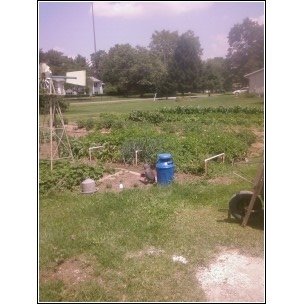
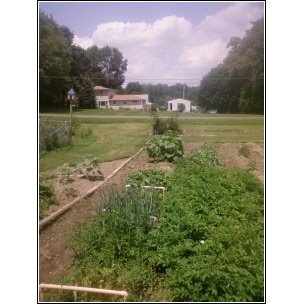
That brings me to the next part. As I mentioned earlier, I've seen or read of people spending hundreds or thousands of dollars putting together a vegetable garden no bigger than our car. My garden areas are extremely simple. I mark them out with stakes and string, then pull the sod layer up with a shovel. The sod is piled generally behind the garage, grass down, and covered with plastic until the following year. This way, the grass is burned off, and I have clean soil to add to areas before I till in the spring. When available, I border the beds with landscape timbers at ground level. This way, I can just mow the grass around them right to the very edge of the bed, and never have to worry about needing to use a trimmer. I use no pretty fencing or stained lumber. Just those timbers to keep the grass from growing into the beds. As always, my garden is to produce food, not to impress anyone or try ending up in some magazine. While I try me best to keep things presentable, I never, ever strive for "pretty".
We were lucky enough to have soil beneath that horrible grass that once held a vegetable garden. We haven't had to add any kind of fertilizer or other additives at all, other than the normal spring dose from our compost pile. While I'm sure that many who want to garden haven't been blessed with good soil, and they may need to work with it so it is suitable for gardening, I see lots of people that make it a lot more work than necessary. I've seen people go for a certain mix that they got from a gardening book that I won't mention. This mix, is to the author and his followers, THE only way to grow vegetables. Sure, it's a great mixture that will work wonders, but again, it isn't necessary. All you need is rich soil, and the basic old time super-secret garden soil amendments that our ancestors used for thousands of years, and still continue to use to this day. They get rather complicated, so grab a notebook and pen to write them down. Here they are-Garbage and shit. C'mon, that's all the garden needs, right? Compost and manure? Sorry to put them into such blunt words, but that's what they are. We only need terms like compost and manure to sound like we're reading straight from the gardening bible. It's no different than calling cow meet beef, or pig meat pork. It's just a made up title to cover up what it really is. But, for now I'll stick with those terms and use them, just for the sake of playing nice and non-offensive.
Anyway....back to my point. All of this soil testing and additives aren't necessary at all. Look back in time at how our ancestors fed their families year after year from their gardens. They never had to run to the local hardware store to get bags of this, packages of that, and sprays for another. They used nothing more than compost and/or manure. No peat moss, no vermiculite, and no chinamart bags of ready-to-go vegetable garden soil. They used physical labor, and what they had around them to gorw their food, and this is the very main point to this very long and outspoken post. Keep things simple. Use the basics that you have already available. Don't try to follow each and every thing that these books say. If you must use these books, use them as a guideline and not a bible. Seriously folks, don't make your garden more work than it actually is or needs to be. It's not that hard, it's not that complicated, and it's not that much work when you put it first.
Get out there and get your hands dirty. Dig your beds and grow things to feed yourself and your family. No matter what your reason behind your garden, give it the attention and respect that it deserves. Feel the power within you to free yourself, even just a little bit, from the marketing trap of the grocery store. Feel the freedom of doing things for yourself that you once felt could only be done by others. Take it seriously and make it a priority, and it will reward you with food and satisfaction for years to come.
One last thing, for those that know who I am referring to. There is a somewhat famous family who has managed to feed themselves for years on a plot of land smaller than ours. They have written books and articles, teach classes, and run several websites. By recently turning themselves into one of corporate-like, money grubbing machines that the spoke out against for so many years, they have lost thousands of followers. They stood on common garden ground with many of us for many years, but now thanks to greed, and quite frankly, egos, they are nothing now but the manure between our toes. Use them as an example. Show them that anyone can do the same things they have by making it a priority. Show them that they aren't and weren't the kings of the movement to bring homesteading back to the suburbs. Prove to them, and to yourself, that it CAN and WILL be done by anyone. Knock them off that high horse they have been riding for so long, and put them in the compost pile where they belong, with the rest of the garbage.
That very part leads me to the reason behind this post. I've been asked many time, in many place, how we managed that much produce from just one acre. There isn't just one answer to that question, but there is one main point, and it's easy-make it a priority.
I read about and hear of so many people that have, or want to, start their own backyard gardens, and honestly, they turn it into something more complicated than building a space shuttle. I've read about people who have built a raised bed from lumber, purchased all of the "proper" ingredients to make the perfect soil, made a cumputer spread or data sheet on each and every plant, spent countless hours laying out the perfect grid to within 1/8 of an inch, and end up spending hundreds or thousands of dollars to grow $75 worth of vegetable. I commend anyone who makes the decision to grow even some of their own food, but at times I have to stand back and ponder the logic behind it.
It's hard for most people to consider their property to be anything more than the typical suburban lot. As much as I'd love to convince people otherwise, they've been programmed by generations of suburbanites to think of it as nothing but a lawn to be mowed and decorated with flowers and a perfectly green grass. Lawns are ingrained in our brains as the norm, but at one time were only for the wealthy. Most people had simple dirt yards (ever heard of someone sweeping the yard?), or had small gardens with a mix of flowers, herbs, and vegetables. No one owned a lawnmower, or at least one that we think of. If the grass wasn't cut with a scythe, it was kept down with livestock. The first available lawn mower wasn't available until 1870,and it was nothing more than a large scale production of a machine that was used to cut the nap from velvet in factories. The first commercial mower was born, and sales boomed as people let the grass grow. Largely after World War 2, with the growth of what we now know as suburbs, the simple reel mower has changed into the machines that we all know today, machines that can cost upwards of $5000 with one single purpose-cutting grass that has no real purpose. Most don't see it as anything but normal. Dad had a lawn to cut, so did grandpa, and now we have our own. Figure in the cost of a mower, fuel for that mower, maintenance on that mower, trimmers, edgers, fertilizers, pesticides, herbicides, and we Americans spend $30 billion annually on our lawns. Think about that number. Thirty Billion Dollars.......on grass. It makes my head hurt.
Lawn grass has no purpose, none at all. Why have it? Why spend money year after year to grow something that you have to mantian, to do nothing with it but cut it and look at it? Why not turn that land into something usefull? In 2008, the EPA estimated that the area in the United States covered by lawns was bigger than the state of Texas. Can you imagine if that entire area, or even half of it, was used by people to produce their own food? We used close to half of our one acre for growing food last year. Just for example, the area the size of Texas is 172,000,000 acres of land. If just half of that was used (86,000,000 acres) to produce the same 1100 pounds that we managed last year, it could easily be used to produce an astounding 86,000,000 pounds of food. That figure is breathtaking. But, instead of all of that food that we could feed our family, friends, and nation with; we use it for grass. Do you see where I'm going?
My approach in the past few years has been simple. Eliminate as much of that worthless grass as possible. I've hand-dug the main garden, along with beds for strawberries, potatoes, peas, greens, carrots, cucumbers, and all of the other fruits and vegetables that we've grown here. I took the food production as a priority, and not just a hobby. To me, producing our own food is more important than nearly anything else we do. When I put it at the top of the list and dug up more areas for it, I not only was able to produce more, I was able to not spend as much valueable time on mowing, trimming, and maintaining that same worthless grass that I have mentioned many times. The initial work was hard. I can't lie about that. Every bed last year was hand dug with a shovel before tilling; but I enjoy the labor and refuse to rent equiptment to add to the cost of gardening. It is partly about saving money, right?
That brings me to the next part. As I mentioned earlier, I've seen or read of people spending hundreds or thousands of dollars putting together a vegetable garden no bigger than our car. My garden areas are extremely simple. I mark them out with stakes and string, then pull the sod layer up with a shovel. The sod is piled generally behind the garage, grass down, and covered with plastic until the following year. This way, the grass is burned off, and I have clean soil to add to areas before I till in the spring. When available, I border the beds with landscape timbers at ground level. This way, I can just mow the grass around them right to the very edge of the bed, and never have to worry about needing to use a trimmer. I use no pretty fencing or stained lumber. Just those timbers to keep the grass from growing into the beds. As always, my garden is to produce food, not to impress anyone or try ending up in some magazine. While I try me best to keep things presentable, I never, ever strive for "pretty".
We were lucky enough to have soil beneath that horrible grass that once held a vegetable garden. We haven't had to add any kind of fertilizer or other additives at all, other than the normal spring dose from our compost pile. While I'm sure that many who want to garden haven't been blessed with good soil, and they may need to work with it so it is suitable for gardening, I see lots of people that make it a lot more work than necessary. I've seen people go for a certain mix that they got from a gardening book that I won't mention. This mix, is to the author and his followers, THE only way to grow vegetables. Sure, it's a great mixture that will work wonders, but again, it isn't necessary. All you need is rich soil, and the basic old time super-secret garden soil amendments that our ancestors used for thousands of years, and still continue to use to this day. They get rather complicated, so grab a notebook and pen to write them down. Here they are-Garbage and shit. C'mon, that's all the garden needs, right? Compost and manure? Sorry to put them into such blunt words, but that's what they are. We only need terms like compost and manure to sound like we're reading straight from the gardening bible. It's no different than calling cow meet beef, or pig meat pork. It's just a made up title to cover up what it really is. But, for now I'll stick with those terms and use them, just for the sake of playing nice and non-offensive.
Anyway....back to my point. All of this soil testing and additives aren't necessary at all. Look back in time at how our ancestors fed their families year after year from their gardens. They never had to run to the local hardware store to get bags of this, packages of that, and sprays for another. They used nothing more than compost and/or manure. No peat moss, no vermiculite, and no chinamart bags of ready-to-go vegetable garden soil. They used physical labor, and what they had around them to gorw their food, and this is the very main point to this very long and outspoken post. Keep things simple. Use the basics that you have already available. Don't try to follow each and every thing that these books say. If you must use these books, use them as a guideline and not a bible. Seriously folks, don't make your garden more work than it actually is or needs to be. It's not that hard, it's not that complicated, and it's not that much work when you put it first.
Get out there and get your hands dirty. Dig your beds and grow things to feed yourself and your family. No matter what your reason behind your garden, give it the attention and respect that it deserves. Feel the power within you to free yourself, even just a little bit, from the marketing trap of the grocery store. Feel the freedom of doing things for yourself that you once felt could only be done by others. Take it seriously and make it a priority, and it will reward you with food and satisfaction for years to come.
One last thing, for those that know who I am referring to. There is a somewhat famous family who has managed to feed themselves for years on a plot of land smaller than ours. They have written books and articles, teach classes, and run several websites. By recently turning themselves into one of corporate-like, money grubbing machines that the spoke out against for so many years, they have lost thousands of followers. They stood on common garden ground with many of us for many years, but now thanks to greed, and quite frankly, egos, they are nothing now but the manure between our toes. Use them as an example. Show them that anyone can do the same things they have by making it a priority. Show them that they aren't and weren't the kings of the movement to bring homesteading back to the suburbs. Prove to them, and to yourself, that it CAN and WILL be done by anyone. Knock them off that high horse they have been riding for so long, and put them in the compost pile where they belong, with the rest of the garbage.
Subscribe to:
Posts (Atom)